Skip to content
Case studies / Service
Built on clay: IRONCLAD Powered by Mersino keeps a 1,600-acre Indiana data center campus dry and supplied
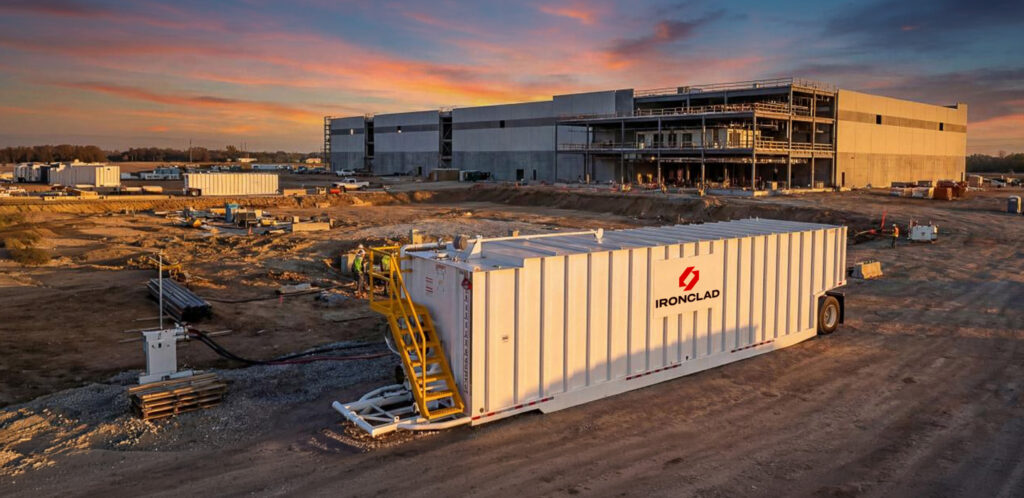
Data center construction moves fast, and water is one of the few things that can stop it cold. On a roughly 1,600-acre data center campus in Indiana, heavy clay soil turned every significant rainfall into a site-wide shutdown risk. What started as a small order for sump cans has become the largest data center project in IRONCLAD’s portfolio, with a round-the-clock team managing water across the entire campus.
The challenge
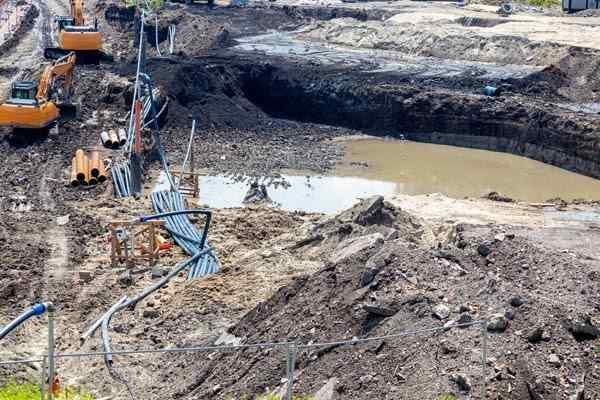
The campus sits on dense clay that doesn’t let water soak into the ground. Any rainfall over half an inch had nowhere to go, and the whole site went under. Excavations flooded, crews lost working days, and the construction schedule was at risk every time a storm rolled through.
The same clay created a second problem. With little groundwater available nearby, the site needed a dependable water supply of its own to keep construction running through dry stretches.
The response
IRONCLAD’s Michigan City, Indiana, branch first came on site with sump cans to collect standing water. After the first major rain event, the general contractor called the team back the next day and asked for a site-wide solution.
IRONCLAD engineered and built a temporary water system that now reaches nearly every corner of the campus.
- Sediment control and dewatering: Contractors pump water out of excavations into sediment tanks with internal filters that trap fines. Filtered water moves into frac tanks and then out to settling ponds, where riprap and silt fence catch remaining sediment before discharge.
- Miles of temporary pipe: Pipelines run along fence lines, through parking lots, and around the perimeter of the site, with booster pumps spaced along the route to keep water moving.
- On-site water supply: 50 frac tanks piped into a common header store 1 million gallons of water, filled by three generator-powered wells. One supply line was bored under a nearby highway to reach a well site.
- Road crossings built for heavy haul: At 30 to 40 points across the campus, the team trenched pipe below grade and capped each crossing with crane mats and steel plates so loaded haul trucks can pass without interrupting flow.
- Ponds built for the job: IRONCLAD excavated man-made ponds to hold and settle discharge water.
- Pipe flushing: As permanent pipe is installed, IRONCLAD flushes each line, holds the chlorinated water in dedicated tanks, and tests it before release.
To stay self-sufficient on a site this size, IRONCLAD runs its own laydown yard on the campus, stocked with excavators, loaders, skid steers, and the rest of the equipment the job requires.
The outcome
The team has worked 24 hours a day, 7 days a week since mobilizing in February. That commitment turned one small order into a long-term partnership, and the scope keeps growing.
- The project has grown to nearly $22 million in work, more than 70 times the original order.
- More than 70 pumps and roughly 80 frac tanks operate across the campus.
- 1 million gallons of stored water keep construction supplied through dry weather.
- A site-wide stormwater system moves water off the clay so crews can keep building after heavy rain.
- New scopes, including pipe flushing, pond excavation, and road crossings, have been added as the relationship has grown.