 Skip to content
What Industrial Facilities & Municipalities Learned from Recent Storm Seasons—and How It Shapes 2026 Planning

Recent storm seasons across the U.S. exposed three recurring problems at industrial sites and municipal systems: capacity gaps, overwhelmed conveyance infrastructure, and slow access to temporary storage and dewatering equipment.
For facilities entering 2026 planning cycles, those failures are driving real changes, not just to capital budgets, but to operational assumptions, field readiness protocols, and compliance documentation.
When we talk about "2026 planning" in the context of stormwater management, we're really addressing three things: revisiting the design assumptions that determine system capacity, building field readiness so teams can respond in hours rather than days, and tightening compliance documentation before regulators come asking questions. FEMA's post-hurricane assessments of Debby, Helene, and Milton reinforced what many facility managers already knew—preparation and resilience aren't theoretical concepts. They're operational requirements.

What Recent Storm Seasons Revealed About Stormwater Risk
Rainfall Intensity Is Stressing Systems Built for Yesterday's Assumptions
Infrastructure designers have long relied on intensity-duration-frequency (IDF) curves, statistical models that estimate how much rainfall to expect over a given duration at a given return interval. The problem: those curves assume stationarity. They're based on historical data that no longer reflects current conditions.
NOAA is now developing Atlas 15 to replace Atlas 14, specifically because the agency recognizes that extreme precipitation patterns are shifting. Research published in Scientific Reports found that ignoring non-stationarity can lead to underestimating extreme precipitation by as much as 60%, which directly translates to undersized pipes, detention basins, and pump stations.
For industrial facilities, this isn't an academic exercise. If your site's drainage infrastructure was designed using 25-year-old precipitation assumptions, your "100-year storm" capacity may now be a 50-year or 25-year event. That's a compliance risk and an operational risk.
Flooding Isn't Only a Coastal Issue—Urban and Industrial Drainage Choke Points Are the Trigger
Storm damage at industrial facilities often starts at predictable failure points. Recent events highlighted several common modes:
- Sewer surcharge: When inflow exceeds capacity, water backs up through drains and manholes. At industrial sites, this can push contaminated water into process areas or force uncontrolled discharges.
- Inflow and infiltration (I&I): Aging infrastructure allows groundwater and surface water into sanitary or storm systems, overwhelming treatment capacity.
- Clogged inlets and conveyance: Debris accumulation during high-intensity rainfall reduces effective capacity right when it's needed most.
- Pump capacity limits and power loss: Pump stations sized for historical peaks can't keep up. Power outages compound the problem, disabling pumps entirely.
- Backflow at outfalls: High water levels in receiving waters prevent gravity discharge, causing systems to back up.
These aren't coastal-specific problems. They occur at inland refineries, manufacturing plants, and municipal systems wherever drainage infrastructure meets its limits.

Lessons That Are Shaping 2026 Planning
The "First 6 Hours" Playbook Is Getting Formalized
Facilities that weathered recent storms with minimal damage had one thing in common: pre-defined response protocols that kicked in before peak rainfall, not after. The "first 6 hours" concept—what happens between forecast and impact—is now being formalized into written procedures.
Pre-stage actions typically include:
- Isolating sensitive process areas from stormwater pathways
- Protecting intakes and outfalls from debris accumulation
- Defining diversion routes for overflow scenarios
- Validating that permitted outfalls are clear and accessible
Trigger-based response criteria are also being documented—specific thresholds that initiate action:
- Rainfall intensity reaching X inches per hour
- Sump levels exceeding a defined percentage of capacity
- Turbidity readings indicating sediment mobilization
- Temporary storage tank levels approaching threshold
Temporary Storage and Dewatering Capacity Is Moving from "Nice-to-Have" to Line Item
One of the most consistent post-storm findings: facilities had nowhere to put captured water. Permanent infrastructure reached capacity, and temporary solutions weren't in place or couldn't arrive fast enough.
Common gaps identified in after-action reviews include:
- No pre-arranged access to temporary tanks or roll-off containers
- Limited pump redundancy: if primary pumps fail or are overwhelmed, no backup capacity exists
- Insufficient hose, fittings, and connection hardware for emergency deployment
- No quick filtration or sediment separation plan before discharge
For 2026 planning, this translates to budget line items: pre-positioned rental agreements, defined staging areas, and clear authorization chains so equipment can be mobilized within hours, not days.
Documentation and Discharge Controls Are Getting Audited Harder After Storms
Regulatory scrutiny increases after major weather events. Facilities that experienced overflows, bypasses, or uncontrolled discharges are finding themselves under closer examination, and those without tight documentation are facing enforcement actions.
Areas getting tightened for 2026:
- MS4 permit compliance: Municipal separate storm sewer system requirements apply to many industrial facilities. Post-storm audits are checking whether BMPs were actually implemented.
- SWPPP updates: Stormwater Pollution Prevention Plans need to reflect current site conditions and include storm response procedures. Outdated SWPPPs are a common citation.
- Inspection logs and BMP maintenance records: Regulators want evidence that controls were functional before the storm, not just installed.
- Discharge sampling plans: If discharge occurred during or after a storm event, what sampling was conducted? What were the results?
The EPA's industrial stormwater program under NPDES requires facilities in regulated categories to maintain permit coverage and implement pollution prevention measures. Post-storm, that paperwork gets reviewed.
Common Post-Storm Failure Points at Industrial Sites
- Lack of temporary storage capacity
- Sediment-heavy runoff exceeding treatment
- Delayed equipment/hauling mobilization
- Power loss disabling pumps
- Clogged conveyance and inlets
- Uncontrolled bypass or overflow
2026 Stormwater Management Planning Framework
Based on lessons from recent storm seasons, here's a practical checklist for facilities developing their 2026 stormwater management plans:
Re-Check Design Assumptions
- Validate rainfall frequency inputs: Are your IDF curves based on current NOAA Atlas 14 data? Has your region released updated guidance? NOAA Atlas 15 preliminary estimates for the contiguous U.S. are expected in 2025-2026.
- Review freeboard targets: Is there adequate margin in detention basins and sumps for events that exceed design capacity?
- Verify pump duty points: Are pumps operating at design capacity, or has efficiency degraded?
- Assess storage volumes: Has sedimentation or debris accumulation reduced effective capacity?
Build a "Surge Capacity" Plan
Define what gets rented versus owned, where equipment stages, who has approval authority, and how fast it can arrive. Include:
- Temporary tanks (frac tanks, weir tanks) for overflow storage
- Roll-off containers and dewatering boxes for sediment separation
- Filtration equipment for discharge treatment
- Pumps, hoses, and fittings for emergency conveyance
- Secondary containment for hazardous material areas
Tighten the Compliance Loop
- Document the following before, during, and after storm events:
- SWPPP and MS4 documentation steps after each significant storm
- Sampling triggers: what conditions require discharge sampling, and what parameters get tested
- Corrective actions: what happened, what was done, and what's being changed
- Maintenance proof: records showing BMPs were functional before the event
Where Ironclad Fits in Storm Response and 2026 Readiness
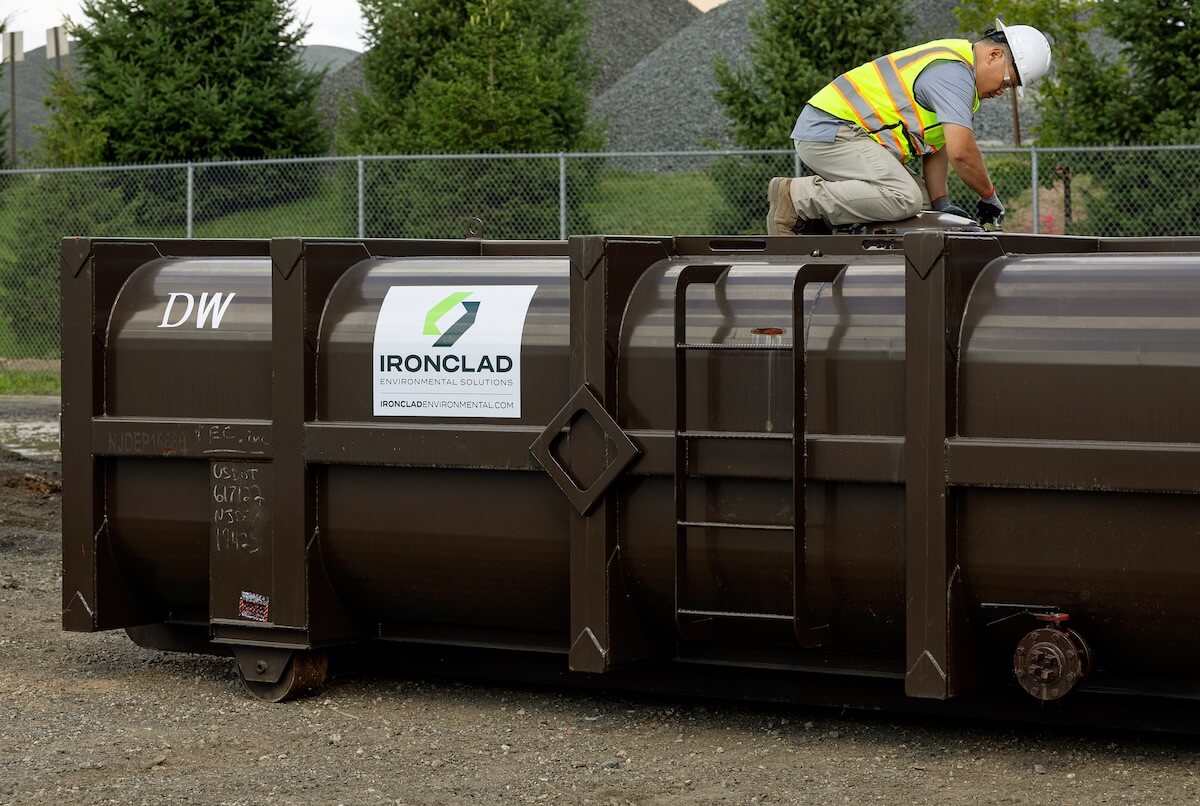
When permanent stormwater systems reach capacity, Ironclad Environmental Solutions provides the temporary storage, separation, and transport capabilities that keep operations compliant and minimize environmental risk.
Our capabilities include:
- Temporary storage: Frac tanks, weir tanks, and roll-off containers for captured stormwater when on-site systems are overwhelmed
- Dewatering solutions: Dewatering boxes with filter liners for separating sediment from water before discharge or transport
- Rapid mobilization: Coast-to-coast fleet availability means equipment can reach your site faster, reducing downtime and spill risk
- Expert support: Our team helps identify the right assets for your specific situation, not just what's available, but what actually solves the problem
Stormwater events don't wait for procurement cycles. Having a pre-established relationship with a containment provider (and knowing what equipment you'll need before you need it) is part of what separates facilities that recover quickly from those that don't.
Need help building your 2026 stormwater surge capacity plan? Contact Ironclad Environmental Solutions to discuss temporary storage, dewatering, and transport options for your facility.