 Skip to content
Managing Excess Liquids on Sites During Heavy Rain
Heavy rain doesn't wait for your site to be ready. When permanent drainage systems hit capacity, excess liquid becomes two problems at once: an operational disruption and a compliance risk.
At industrial facilities and construction sites, the challenge isn't just volume. It's what's in the water. Stormwater that contacts process areas, stored materials, fuel, or disturbed soil picks up contaminants that turn a drainage issue into a regulatory one. Uncontrolled discharge of contact water can trigger EPA enforcement actions, NPDES permit violations, and project shutdowns.
The sites that handle heavy rain well aren't the ones with the biggest permanent infrastructure. They're the ones with a plan for what happens when that infrastructure isn't enough. This guide covers the practical stormwater runoff solutions that keep industrial and construction sites operational during and after heavy rain events.

Why Heavy Rain Creates Problems That Permanent Infrastructure Can't Always Handle
Most site drainage systems are designed for normal operating conditions, not worst-case scenarios. Detention basins, sumps, storm drains, and pump stations are sized based on historical rainfall data and expected flow rates. When a heavy rain event exceeds those assumptions, the gap between system capacity and actual volume becomes a problem fast.
Common failure points during heavy rain include:
- Overwhelmed detention basins and sumps. Storage fills faster than it can be pumped or drained, leaving no buffer for continued inflow.
- Sewer surcharge and backflow. When municipal or site storm systems exceed capacity, water backs up through drains and manholes. At industrial sites, this can push contaminated water into process areas.
- Clogged inlets and conveyance. Debris, sediment, and material buildup during high-intensity rainfall reduce effective drainage capacity right when it's needed most.
- Pump station limits. Pumps sized for historical peak conditions can't keep pace with actual inflow. Power outages during storms compound the problem by disabling pumps entirely.
- Sediment-heavy runoff exceeding treatment capacity. Construction sites and facilities with exposed soil or stockpiles generate runoff loaded with suspended solids that overwhelm filtration and settling systems.
The result is excess liquid with nowhere to go. Without temporary stormwater runoff solutions in place, that liquid either sits (delaying operations) or leaves the site uncontrolled (creating a compliance violation).
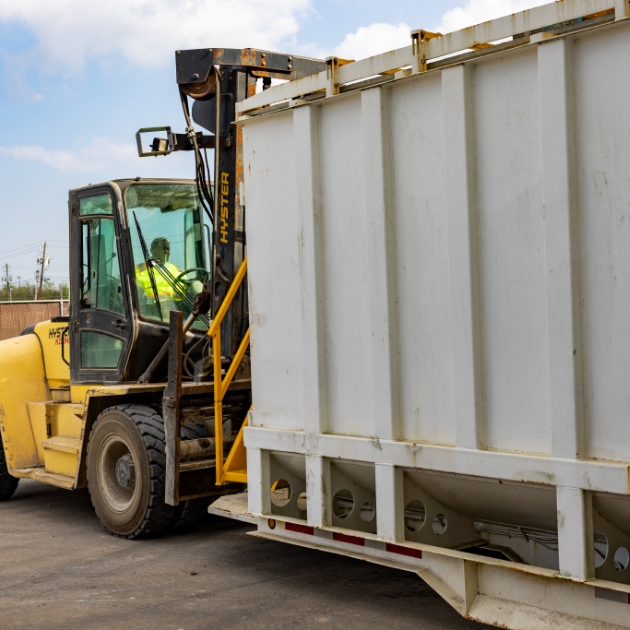
Stormwater Runoff Solutions for Industrial and Construction Sites
When permanent systems reach their limits, temporary equipment fills the gap. The right combination of storage, separation, pumping, and filtration keeps excess liquid contained, treated, and compliant.
Here's how each solution type works and when you need it:
Temporary Storage
When on-site detention reaches capacity, temporary tanks capture overflow and buy you time to pump, treat, or transport.
- Frac tanks (up to 21,000 gallons / 500 BBL) provide high-volume temporary storage for captured stormwater. Open top configurations allow direct access for pumping and treatment. Multiple tanks can be manifolded together for additional capacity.
- Weir tanks (up to ~18,000 gallons / 427 BBL) combine storage with built-in settling. Internal baffles promote gravity separation of suspended solids and oils before discharge or transport, reducing the load on downstream filtration.
- Roll-off containers handle smaller volumes or contaminated runoff that needs to be isolated. Vacuum boxes, metal-lid boxes, and watertight roll-offs contain liquids that can't be mixed with general stormwater.
Dewatering and Sediment Separation
Heavy rain mobilizes sediment, especially on construction sites and facilities with disturbed or exposed ground. Dewatering boxes with filter liners separate solids from water before discharge or transport.
- Dewatering boxes (20-30 YD configurations) use filter bag liners to capture sediment while allowing water to pass through. This is one of the most common stormwater runoff solutions on construction sites where turbidity is the primary discharge concern.
- Separated solids stay in the box for disposal. Filtered water can be directed to an approved discharge point or held in a tank for additional treatment.
Pumping
When gravity drainage fails or can't keep up, pumps provide the conveyance capacity to move water where it needs to go.
- Prime-assisted solids handling pumps (4", 6", 8") handle stormwater with debris and suspended solids without clogging. These are the primary choice for moving high-volume, sediment-laden runoff.
- Sound-attenuated pumps (4", 6") deliver high flow rates in noise-sensitive environments like urban construction sites or facilities near residential areas.
- Air-operated diaphragm (AOD) pumps work in hazardous or confined environments where electric or diesel-powered equipment isn't practical.
Filtration
Captured stormwater often needs treatment before it can be discharged. Filtration systems reduce suspended solids, turbidity, and other contaminants to meet permit requirements.
Filtration is typically the last step before discharge, positioned downstream of settling (weir tanks) or dewatering (dewatering boxes). The specific filtration setup depends on what's in the water and what your discharge permit requires.

Compliance Considerations When Managing Stormwater During Rain Events
Excess water on-site is an operational problem. Excess water leaving your site uncontrolled is a regulatory one. Understanding where the compliance lines are helps you make faster decisions during a storm and protects you afterward.
Key Regulatory Frameworks
- NPDES permits. The EPA's National Pollutant Discharge Elimination System governs stormwater discharges from industrial facilities and construction sites. If your site is in a regulated category, you're required to maintain permit coverage and implement pollution prevention measures.
- SWPPP requirements. Stormwater Pollution Prevention Plans document the BMPs (best management practices) your site uses to control runoff. Regulators don't just want to see that a plan exists. They want evidence that it was implemented and that the BMPs were functional before and during the rain event.
- MS4 obligations. Municipal separate storm sewer system requirements apply to many industrial facilities. Post-storm audits check whether BMPs were actually in place and operational.
Contact Water vs. Non-Contact Water
This distinction drives most discharge decisions during heavy rain:
- Non-contact stormwater hasn't been exposed to pollutants, process areas, or contaminated surfaces. Depending on permit conditions, it may be eligible for direct discharge.
- Contact water has come into contact with industrial materials, chemicals, fuel, or disturbed soil. It must be captured, tested, and treated before discharge, or hauled to an approved treatment facility.
Mixing the two can disqualify otherwise clean stormwater from direct discharge, increasing your storage, treatment, and transport burden. Keeping contact and non-contact water separated from the start is one of the simplest ways to reduce cost and complexity during a rain event.
Post-Storm Documentation
Regulatory scrutiny increases after major weather events. Facilities that experienced overflows, bypasses, or discharges during storms need tight records. Keep documentation for:
- Inspection logs confirming BMPs were functional before the event
- Discharge sampling results (what was tested, what the results were)
- Corrective actions taken during and after the storm
- Equipment deployment records (what was mobilized, when it arrived, where it was staged)
- SWPPP updates reflecting any changes to site conditions or procedures

Before the Rain: Building a Stormwater Surge Plan
The facilities and sites that recover fastest from heavy rain events aren't reacting in real time. They're executing a plan they built before the forecast.
A stormwater surge plan doesn't need to be complicated. It needs to answer these questions in advance:
- Where will excess water collect? Walk the site. Identify low points, areas with poor drainage, locations where contact water and non-contact water converge, and any points where overflow could leave the site boundary.
- What's your temporary capacity gap? Compare your permanent storage and drainage capacity against a realistic worst-case rainfall event. The difference is what you need to cover with temporary equipment.
- What equipment do you need, and where does it stage? Define what gets rented versus what's already on-site. Identify staging locations for frac tanks, dewatering boxes, and pumps. Confirm that access routes can accommodate delivery trucks during wet conditions.
- Who has authority to mobilize equipment? When a storm is 6 hours out, you don't have time for procurement cycles and approval chains. Designate who can authorize equipment rental and deployment, and make sure they know the plan.
- What are your action triggers? Define specific thresholds that initiate response:
-
-
- Rainfall intensity reaching a defined rate (inches per hour)
- Sump or detention basin levels exceeding a set percentage of capacity
- Turbidity readings indicating sediment mobilization
- Forecast models predicting accumulation above your system's design capacity
-
- Do you have pre-established rental agreements? Pre-negotiated contracts with a containment provider mean one call starts equipment moving. Without them, you're competing for available inventory during an event when everyone else needs it too.
Where Ironclad Fits in Stormwater Response
When permanent stormwater systems reach capacity, Ironclad Environmental Solutions provides the temporary storage, dewatering, pumping, filtration, and transport capabilities that keep operations compliant and minimize environmental risk.
Our stormwater runoff solutions include:
- Temporary storage: Frac tanks, weir tanks, and roll-off containers for captured stormwater when on-site systems are overwhelmed
- Dewatering: Dewatering boxes with filter liners for separating sediment from water before discharge or transport
- Pumping: Prime-assisted, sound-attenuated, and AOD pumps for emergency conveyance
- Filtration: Systems to treat captured water to meet discharge standards
- Rapid mobilization: Coast-to-coast fleet availability so equipment reaches your site faster
- Expert support: Our team helps identify the right assets for your specific situation, not just what's available, but what actually solves the problem
Stormwater events don't wait for procurement cycles. Having a pre-established relationship with a containment provider, and knowing what equipment you'll need before you need it, is part of what separates sites that recover quickly from those that don't.
Learn more about our stormwater management solutions and wastewater management capabilities.
Need help building a stormwater surge plan for your site? Contact Ironclad Environmental Solutions to discuss temporary storage, dewatering, and pumping options.
Stormwater Runoff Solutions FAQs
What are stormwater runoff solutions for industrial sites? Stormwater runoff solutions include temporary storage tanks (frac tanks, weir tanks), dewatering boxes for sediment separation, pumps for emergency conveyance, filtration systems for discharge treatment, and roll-off containers for contaminated water containment. The right combination depends on your site conditions, volume, and permit requirements.
How do you manage excess water on a job site during heavy rain? Start by capturing overflow in temporary storage before it leaves the site. Use pumps to move water from low points or overwhelmed systems to holding tanks or dewatering equipment. Separate sediment, treat as needed, and either discharge under permit conditions or transport to an approved facility. Having a pre-built surge plan and pre-established equipment access makes the response significantly faster.
What equipment is used for temporary stormwater containment? Common equipment includes frac tanks (up to 21,000 gallons) for bulk storage, weir tanks for storage with built-in settling, dewatering boxes for sediment separation, various pump types for conveyance, filtration systems for treatment, and vacuum or metal-lid roll-off boxes for contaminated runoff.
Do I need a stormwater pollution prevention plan (SWPPP)? Most industrial facilities and construction sites disturbing one or more acres are required to maintain a SWPPP under EPA NPDES regulations. The plan documents your BMPs, stormwater controls, inspection schedules, and response procedures. Regulators check whether SWPPPs are current and whether documented controls were actually in place during storm events.
How do dewatering boxes work for stormwater management? Dewatering boxes use filter bag liners to capture suspended solids while allowing water to pass through. Sediment-laden stormwater enters the box, solids are retained by the filter, and cleaner water exits for discharge or further treatment. The separated solids stay in the box for disposal. This is one of the most common solutions for managing turbidity on construction sites.
What's the difference between contact water and non-contact stormwater? Non-contact stormwater hasn't been exposed to pollutants, industrial materials, or contaminated surfaces and may be eligible for direct discharge depending on permit conditions. Contact water has come into contact with process areas, chemicals, fuel, or disturbed soil and must be captured, tested, and treated before discharge or transported to an approved treatment facility.