 Skip to content
Hurricane & Storm Preparedness for Industrial Sites: A Containment and Compliance Checklist
A major storm threatens more than your buildings and equipment. For industrial operations, a single flooded containment area or a displaced waste stream can trigger an environmental release, a regulatory violation, and days of unplanned downtime. The sites that come through a hurricane in good standing are the ones that treated storm preparedness as a containment problem long before the forecast turned serious.
This guide breaks down what to assess, what to stage, and how to respond so your operation stays compliant and operational through storm season. IRONCLAD Powered by Mersino supports industrial sites across the country with the containment capacity and field expertise to make that planning real.
Why Storm Prep Is a Containment Problem
When heavy rain and storm surge hit a facility, the immediate risk is rarely structural. It is the movement of liquids and contaminants in ways your normal operations were never designed to handle.
The most common storm-related exposures include:
- Stormwater intrusion into process areas, secondary containment, and storage zones
- Overflowing impoundments and sumps that can no longer hold incoming volume
- Mobilized contaminants as floodwater carries fuels, chemicals, and sediment off-site
- Displaced tanks, drums, and totes that rupture or leak under surge pressure
- Compliance exposure when any of the above reaches stormwater outfalls or navigable waters
Each of these is a containment failure first and a paperwork problem second. Planning around capacity, secondary containment, and fast mobilization addresses the root cause rather than the cleanup.

Assess Your Site's Vulnerabilities Before the Season
Effective storm preparedness starts well before a named system forms. A pre-season assessment gives you time to correct gaps while equipment and crews are still readily available.
Work through the following:
- Map low-lying and flood-prone areas: Identify where water pools, where it flows, and which storage or process zones sit in its path.
- Review your SPCC and stormwater permits: Confirm your Spill Prevention, Control, and Countermeasure plan reflects current site conditions and that your stormwater controls match permit requirements.
- Inspect existing containment: Check berms, liners, dikes, and sumps for capacity and condition. Aging or undersized containment is a liability when volumes spike.
- Quantify your worst-case volume: Estimate the additional liquid capacity you would need if your primary containment were overwhelmed, then plan to source it before demand surges.
Pre-Storm Containment Strategies
Once you know your vulnerabilities, the goal is to add capacity and control where the assessment flagged risk. Practical pre-storm strategies include:
- Reinforce secondary containment around tanks, chemical storage, and fueling areas so any displacement stays contained.
- Stage temporary containment for at-risk materials, drums, and mobile equipment that cannot be relocated to higher ground.
- Set up stormwater capture and diversion to keep clean runoff separate from potentially contaminated water and to reduce the load on your existing systems.
- Add surge capacity by staging extra tanks and boxes before the storm arrives, not after volumes are already rising.
The common thread is timing. Containment that arrives ahead of the storm protects you. Containment you scramble for during the event rarely does.
Key Equipment for Storm Readiness
Different exposures call for different assets. Below are the workhorses of industrial storm response and where each one fits.
Frac Tanks
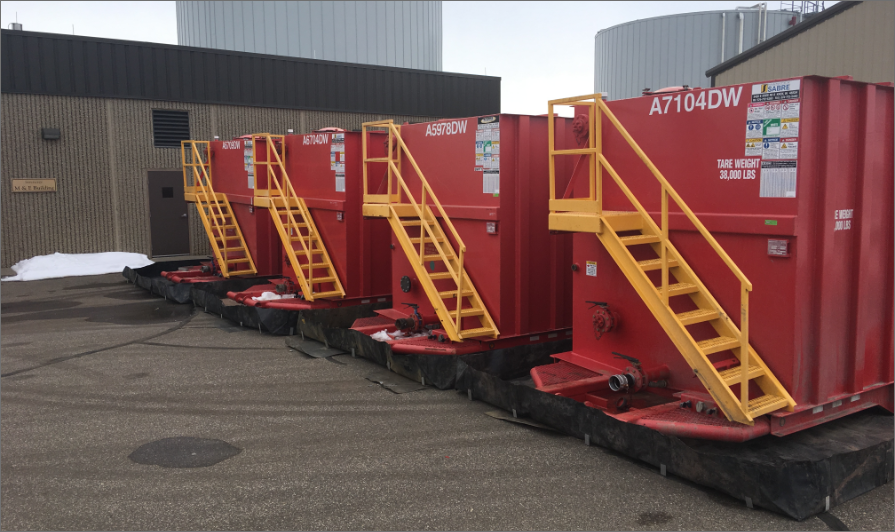
Frac tanks provide large-volume liquid storage for stormwater surge, displaced product, fuel, and contaminated water. They are a fast way to add tens of thousands of gallons of containment capacity to a site ahead of a storm. Pre-staging frac tanks gives you somewhere to put excess volume before it overwhelms your primary systems.
Roll-Off Boxes
Roll-off boxes handle solid and semi-solid waste streams, including contaminated debris, saturated absorbents, and storm-generated cleanup material. They keep waste segregated and ready for compliant transport.
Vacuum Boxes and Dewatering Equipment
Vacuum boxes and dewatering systems help you recover standing water and separate solids from liquids during and after a storm. This speeds up the return to normal operations and reduces the volume of waste requiring disposal.
Berms, Liners, and Secondary Containment Systems
Modular berms and liners create temporary secondary containment exactly where you need it, whether under staged equipment, around fueling points, or beneath storage relocated for the event.
For a full view of available assets and where they apply, explore Ironclad's Solutions and Industry pages.
Mobilization and Timing: Do Not Wait for the Forecast
Storm demand is regional and it spikes fast. When a system moves toward a populated industrial corridor, every operation in the path starts sourcing the same tanks, boxes, and containment systems at the same time. Availability tightens quickly.
The sites that stay compliant and operational are the ones that secure assets early. Ironclad operates one of the largest specialty containment fleets in the country, with coast-to-coast availability and the ability to mobilize quickly. That scale matters most in the days before a storm, when local supply is stretched thin and lead time is the difference between readiness and exposure.
Build your equipment plan during the pre-season assessment, and confirm your sources before the season's first major threat.
Post-Storm Recovery and Cleanup
Preparedness does not end when the storm passes. The recovery phase carries its own containment and compliance demands.
Prioritize the following:
- Contain floodwater and contaminated runoff before it spreads or reaches a regulated outfall.
- Segregate waste streams so liquids, solids, and contaminated materials are handled and documented correctly.
- Arrange compliant transport and disposal for the waste your cleanup generates.
- Document everything to support your compliance reporting and any required notifications.
Moving quickly here limits both environmental impact and the duration of your downtime. The faster you contain, segregate, and remove storm waste, the faster you return to compliant operations.
Stay Ahead of the Next Storm
Hurricane and storm preparedness is fundamentally about protecting three things at once: your environmental compliance, the surrounding environment, and your uptime. A site that has assessed its vulnerabilities, reinforced its containment, and locked in equipment availability ahead of time is positioned to weather the event and recover fast.
Need expert help building a storm-readiness plan for your site? Ironclad's field experts can assess your containment needs and stage the right equipment before the next storm hits. Contact Ironclad today to get started.