 Skip to content
Spring Turnaround Season Is Here: What to Have in Place Before Work Starts
Spring doesn't ease in gradually for most industrial operations — it arrives with a backlog. Planned shutdowns, construction restarts, pipeline work, and refinery turnarounds all cluster in the same narrow window. When that window opens, equipment availability tightens fast.
The operators who move first get the equipment they need, on-site when they need it. The ones who wait scramble — and scrambling on a turnaround costs more than the rental ever would.
Here's what spring preparation actually looks like — and what to have locked in before your project kicks off.

Why Spring Hits Hard Across Industries
Multiple industries converge on spring as their primary maintenance and mobilization window:
- Construction: Ground thaws, sites activate, and dewatering needs spike quickly as excavation and foundation work ramp up.
- Refining and Petrochemical: Planned turnarounds are front-loaded into spring before summer demand peaks and regulatory scrutiny increases.
- Utilities: Infrastructure inspection and maintenance windows open up as winter conditions lift.
- Oil and Gas: Pipeline integrity work, completions, and midstream operations resume at scale.
All of these sectors draw on the same pool of specialty containment equipment. When demand spikes across all of them simultaneously, availability shrinks.
What Needs to Be in Place Before Work Starts
Site readiness isn't just about having a plan. It's about having the right assets confirmed, staged, and ready to go. For most spring projects, that means:
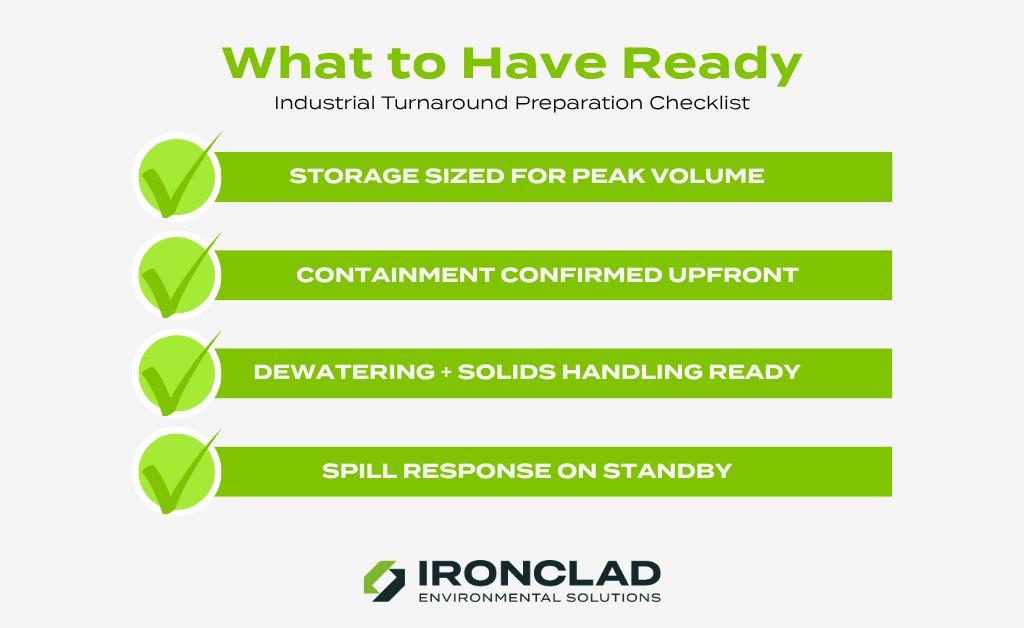
- Temporary liquid storage sized for peak volume — not average conditions. Spring weather can push dewatering volumes significantly above baseline.
- Secondary containment confirmed before equipment arrives on-site. Double wall tanks, berms, or lined areas — whichever your permit conditions require.
- Dewatering and solids handling equipment ready for excavation sites or process drainage. Weir tanks, vacuum boxes, and roll-off units for sediment-laden water.
- Spill response assets on standby, particularly on sites with active process fluids or environmental compliance obligations.
Getting these pieces confirmed early also gives your team time to address site access, ground conditions, and permit requirements without last-minute pressure.
Equipment That Books Out Fast in Spring
Certain assets move off the lot quickly once the season shifts. If your project depends on any of the following, early reservation isn't optional:
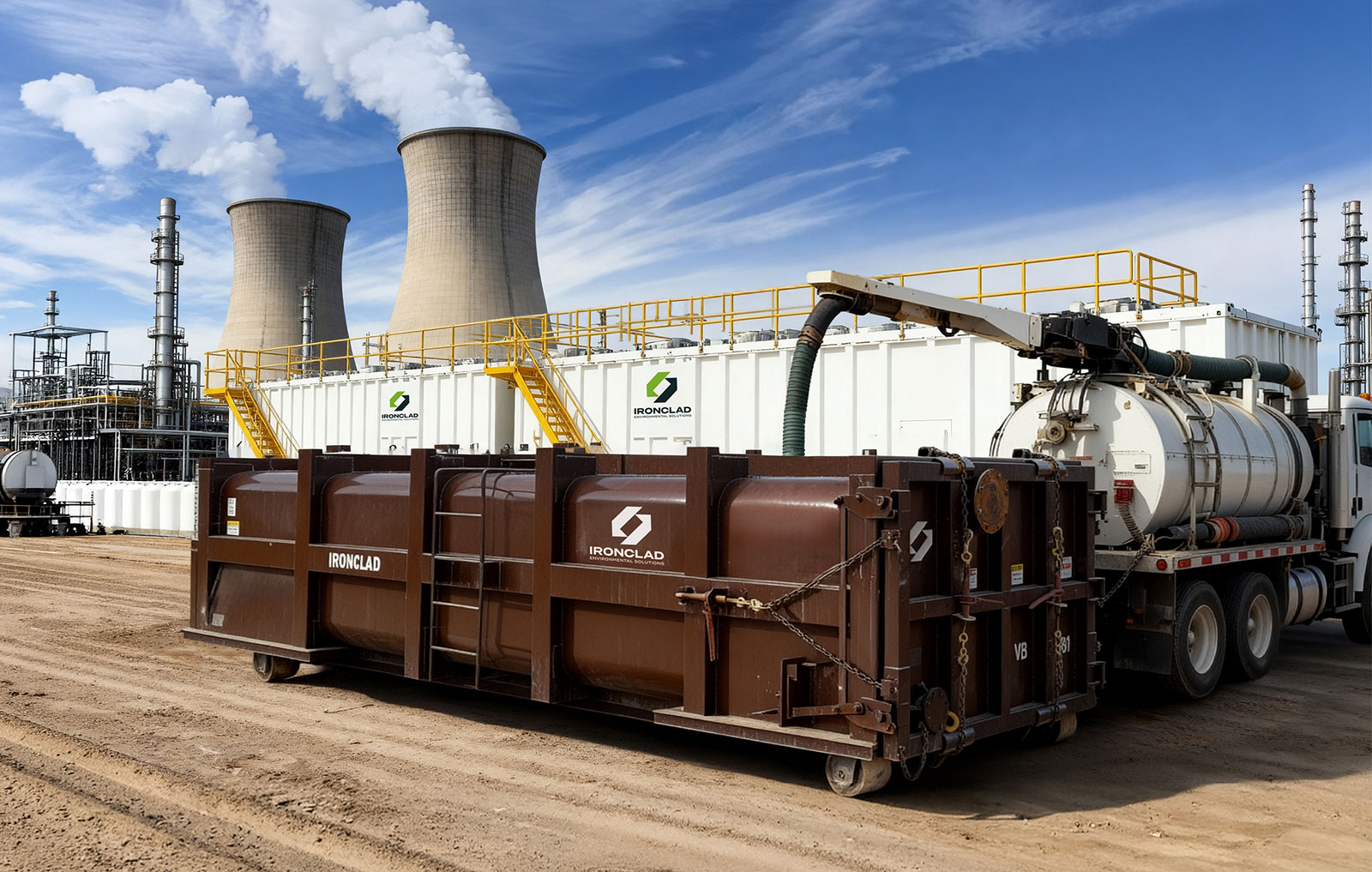
- Frac tanks (500 BBL standard, plus double wall and specialty configurations)
- Vacuum boxes and roll-off boxes for solids and slurry handling
- Dewatering equipment for excavation and groundwater control
- Stainless steel and poly tanks for chemical-compatible storage in plant turnarounds
Fleet availability across the industry tightens in March and April. Projects starting in May or June that haven't secured equipment by early spring often face delays — or end up with equipment that isn't the right fit for the job.

Ironclad's Role in Spring Turnaround Planning
Ironclad Environmental Solutions operates the largest specialty containment fleet in the U.S. — coast-to-coast availability, rapid mobilization, and a full range of assets from 170 BBL mini frac tanks to modular IronMax systems over a million gallons.
More importantly, our team works through the project details before a single piece of equipment rolls. That means evaluating your volume requirements, site constraints, liquid type, and compliance conditions to confirm the right asset — not just the available one.
Spring moves fast. Getting your containment plan in place now means your project doesn't have to wait for it later.
Ready to lock in equipment before the spring rush?
Contact Ironclad Environmental Solutions to discuss your spring project requirements and confirm availability before fleet capacity tightens.