 Skip to content
Conversations with IRONCLAD Powered by Mersino Leaders: What Two Coasts of Field Experience Reveal About Our Brand
A look inside IRONCLAD Powered by Mersino Leaders through the eyes of two long-tenured sales leaders, one on each coast.
To better understand what actually drives the tank rental and environmental services business from the field, we sat down with two of its longest-tenured sales leaders. One runs the East regional sales team. The other has an account management role across Southern California, where same-day calls and storm-driven demand are a way of life. Between them, they bring close to four decades of combined experience across Ironclad, the legacy Adler Tank Rentals brand, and the broader environmental services industry.
Even on opposite coasts, working different account types, and serving very different seasonal demand cycles, the same value props showed up again and again: speed, transparency, follow-through, and a fleet built to handle real emergencies.
Here is what we learned.
The Universal Answer to “Why Ironclad?”
Ask two of Ironclad's most experienced sales leaders why customers choose Ironclad, and you get a remarkably consistent answer. It comes down to three things: integrity, responsiveness, and follow-through.
Mike, the Southern California outside sales rep, framed it in terms of transparency. Customers stay because they trust that what is promised is what gets delivered, every time.
"I never want to surprise the customer. They should always know what to expect. That all goes back to integrity and being completely transparent with both your internal people and your customers." Mike DiMario, Outside Sales, Southern California
Dave, who manages the East region and came up through 26 years in the environmental services world before joining Ironclad, framed it slightly differently. For him, the difference is that Ironclad's reps act as account partners, not order takers.
"Our sales team isn't just order takers. They go out and they meet the customers, they get face to face with them. That is what really drives it." David Cronk, Regional Sales Manager, East
Both leaders kept circling back to the same idea: relationships are built on showing up, doing what you said you would do, and being there when something goes wrong. That is what keeps customers calling back.

Emergency Response Is the Real Differentiator
If there is one place where Ironclad's positioning gets sharpest, it is emergency response. This is the segment of the market that pays a premium because the cost of waiting is enormous, and it is also the segment that several large national competitors quietly avoid.
Mike's daily numbers tell the story. Roughly 50 to 60 percent of the business he runs through the system on any given day is either an immediate need or a need for tomorrow morning. He fields six to eight emergency calls in a typical day. A common scenario: a contractor running a chemical cleaning at a Southern California refinery realizes mid-job that they need a frac tank on site first thing the next morning.
“When you have a problem, you need a quick solution. We find them quick. We solve their problems quickly and with urgency. That is what keeps them coming back.”
Mike DiMario
Dave sees the same dynamic from the East. In his words, several of Ironclad's national competitors are more comfortable with planned outages and longer-lead-time projects, which leaves the urgent calls for someone else to handle.
“Some of our competitors typically don't do that type of emergency response. They are more geared toward the planned outages, which kind of hurts them in their own way.”
David Cronk
The mechanics behind that responsiveness are simple. The rep takes the call, ends the call, and immediately gets operations involved. Equipment moves out fast. There is no internal back-and-forth slowing the response down.
Two Coasts, Two Very Different Demand Pictures
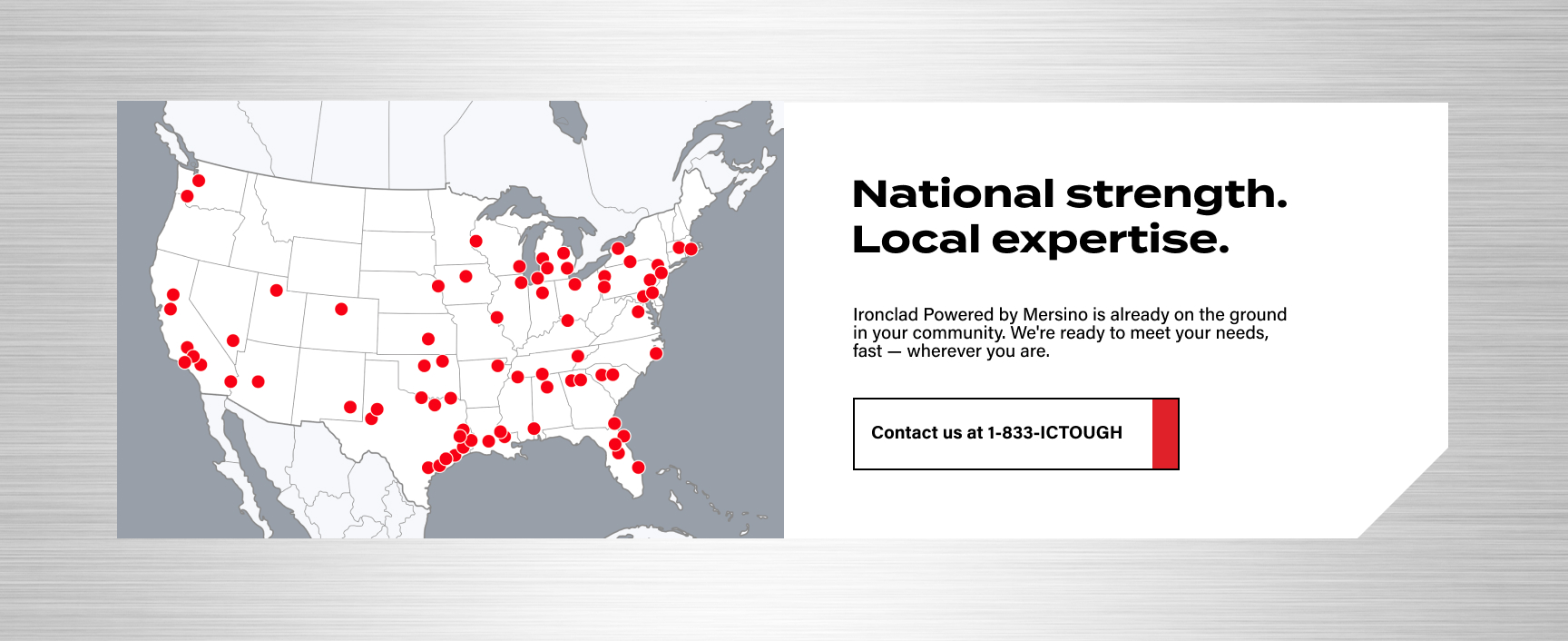
Ironclad's customers may share the same need for storage, containment, and waste handling, but the seasonal patterns and project types vary widely by geography. Hearing how each leader described their territory made that obvious.
East Coast Priorities
Dave pointed to a handful of demand drivers that have either grown sharply or stayed reliably steady across the East:
Data centers: Currently the largest active construction build in the industry. Cooling system failures, in particular, drive urgent storage needs that can swing into the millions of dollars per hour of avoided downtime.
Oil and gas resurgence: A sustained increase in drilling and pipeline activity has expanded the customer base across multiple regions.
Outage seasons: Two predictable windows each year, roughly April through June and September through November, drive heavy demand from power plants, paper mills, steel mills, and auto manufacturers. Bid windows for these jobs open well in advance, often a full season ahead.
Glycol storage for airports: Requests for proposal typically go out in July for winter de-icing operations, even though the actual de-icing work is months away.
Hurricane preparation: From July through November, IronMax frac tanks and large-volume containment become the focus.
Southern California Priorities
Mike's region tells almost the opposite story. There is no real freeze season, no hurricane risk, and very few data centers (cheap land, abundant water, and surplus electricity all being in short supply). What dominates instead is stormwater.
“Every construction site and every manufacturing plant has to contain their stormwater. Anything that lands on their site has to be contained and treated before it is released to storm drain in California.”
Mike DiMario
California has been getting compressed rainfall in recent years, sometimes a year's worth of rain in a four to six week window. When that happens, on-site treatment systems get overwhelmed quickly, and Ironclad goes to work deploying storage tanks to keep runoff contained until the rain stops and the treatment systems can catch up. The rainy season typically runs November through April or May.
Mike also flagged a less visible but rapidly growing line of work: pipeline hydrostatic testing. Natural gas, crude oil, gasoline, and fuel oil pipelines all require pressure testing for integrity, often every ten years. The work uses millions of gallons of water at extreme pressure to confirm a pipeline can safely carry product. Ironclad started taking on this work in the fall of 2024 and has since realized it represents steady, year-round demand from multiple utility customers.
The Connecting Thread
Both leaders kept circling back to the value of a national fleet. Mike shared a recent example: a Southern California client called him about a project in New Mexico, well outside his territory. He connected them with the Midland, Texas branch, and the client had a quote in hand within seven minutes. That kind of cross-branch handoff is what allows Ironclad to keep customers loyal across geographies, not just on a single project.

What Is Changing in the Industry
Asked what has shifted most over the past three to five years, the two leaders pointed to different things, both of which are reshaping how the business works.
Mike pointed to the wave of mergers and acquisitions on the customer side. Independent operators have been pulled into larger umbrellas. Each acquisition resets billing platforms, procurement workflows, and points of contact, and sales reps spend real time keeping up with who now owns whom.
Dave pointed to two structural shifts. Oil and gas activity has accelerated again, particularly in his Southern and Mid-Atlantic regions. And data centers have emerged as a category of their own, growing fast enough that every major player in the tank rental industry is now actively chasing the work. The customer profile is different (maintenance managers rather than construction project managers in many cases), the urgency is higher, and the financial stakes per hour of downtime are larger than almost anything else in the market.
What has not changed, both leaders emphasized, is what customers actually want when they call: a fast response, a transparent price, and a partner who follows through. That is the through-line.
Who Actually Makes the Call
Across both interviews, the decision makers showed up consistently:
- Project managers
- Maintenance managers (especially at data centers)
- Operations managers
- Superintendents
- Branch managers and the occasional VP
Pre-negotiated relationships matter too. Refineries and chemical plants frequently require Oil Spill Response Organization (OSRO) agreements with their providers, which lock in a four-hour response window when something goes wrong.
What This Looks Like in Practice
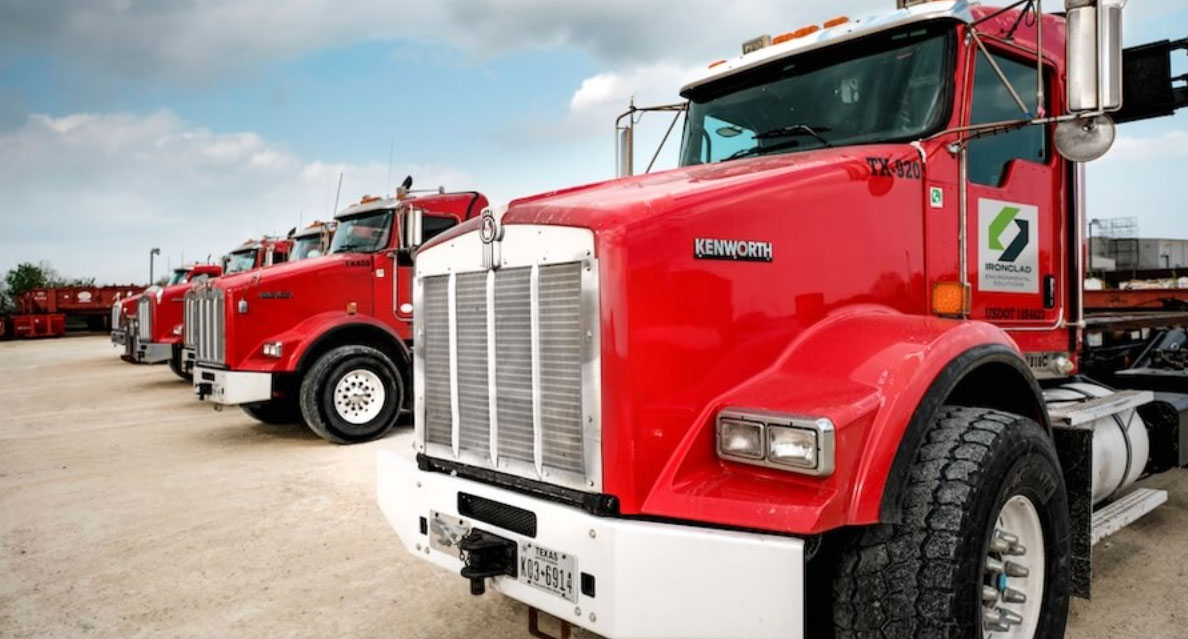
Two coasts, two roles, two very different territories, and yet the same answers kept surfacing. Customers stay with IRONCLAD because they get a fast answer, an honest price, and a team that does what it says it will do. The fleet is large enough to handle real emergencies. The geographic footprint is wide enough to support customers on cross-state projects. And the people on the phones have, in many cases, been doing this work for fifteen, twenty, or twenty-five years.
None of that is unique to one rep or one branch. It is built into how Ironclad operates, which is the only way two leaders sitting on opposite coasts could independently describe the same company in nearly identical terms.
If your team is planning a turnaround, preparing for storm season, working through a hydrostatic pipeline test, or staring down an unexpected need today, Ironclad is built for the call. Reach out to the local branch or visit ironcladenvironmental.com to find the right point of contact.