 Skip to content
What to look for when choosing an environmental services provider
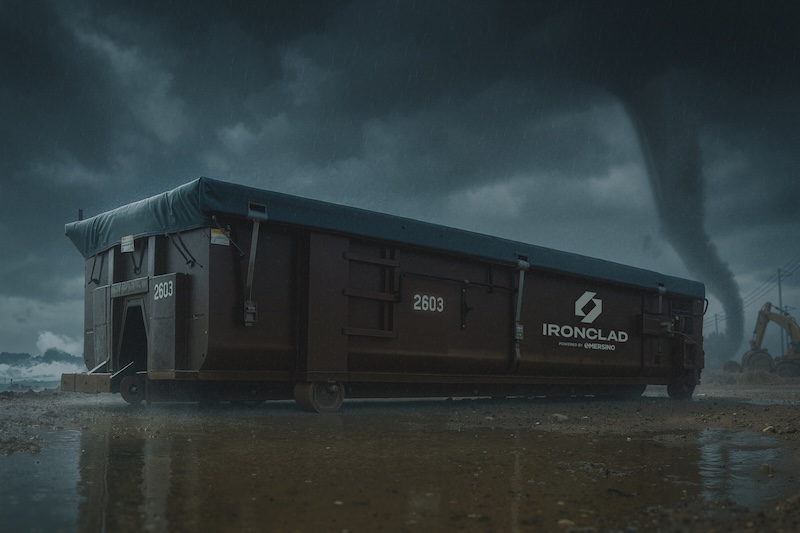
A strong environmental services partner is defined by a few core traits: fast response and mobilization, a large fleet it fully owns, full-service containment and waste management under one roof, a serious compliance record, and proven experience in your industry. Weigh any environmental service provider against these before you sign, not on price alone.
No single trait makes a provider the right fit. The strongest partners deliver all of them at once, because a weakness in any one, whether slow response, a thin fleet, or a compliance gap, tends to surface right when a job goes sideways.
Response time and mobilization speed
In containment work, speed is the whole game. A provider that quotes a competitive rate but needs several days to stage equipment offers little during an active emergency response. Ask each candidate how quickly they can mobilize assets to your site, and ask them to back the claim with recent examples at a similar scale.
Reliable emergency service comes down to logistics. Look for a partner that runs a 24/7 dispatch line, keeps crews on call, and can pull equipment from multiple locations at once. When a single event calls for dozens of roll-off boxes or frac tanks on short notice, local inventory alone will not cover it, and an industry leader is built to surge without passing the delay back to you.
Fleet Size and On-Hand Equipment
Availability depends on how much equipment a provider actually owns and keeps ready. A large, well-maintained fleet means your project does not stall while the company sources units from a third party. It also means you can scale up mid-job without renegotiating terms or waiting on a competitor's backlog.
Equipment rental is only as good as the assets behind it. Before you sign, confirm the following:
- The provider owns its fleet rather than brokering equipment from other suppliers.
- Inventory is deep enough to support a surge, not just a routine order.
- Assets are inspected and maintained on a documented schedule.
A leading provider keeps its fleet deep, because that is the difference between a quote and equipment that shows up on the day you need it.
Breadth of containment and waste management services
Complex sites generate both liquid and solid waste, and the two rarely stay separate during an upset. A partner that handles only one leaves you coordinating multiple vendors under pressure. Prioritize an environmental service company whose waste management capabilities span containment, storage, transfer, transport, and disposal under one roof.
Strong providers cover both hazardous waste and non-hazardous waste, along with the containment and waste disposal steps that connect them. The practical test is whether the same partner can stage containment, move the material, and support cleanup without handing you off. Single-source disposal services reduce your coordination load and close the gaps where compliance problems usually start.
Regulatory compliance and risk management
Handling hazardous materials carries regulatory exposure, and the liability often lands on the generator, not the hauler. Your partner should treat regulatory compliance, environmental protection, and environmental quality as core services, not an afterthought bolted onto a rental.
A qualified hazardous waste service provider maintains current certifications, follows documented safety protocols, and gives you the paperwork a regulator will ask for. A partner that publishes its safety and compliance standards and tracks them through every job is far easier to defend during an audit. That documentation is what keeps your facility defensible long after the equipment leaves.
Relevant industry experience
An environmental services provider that understands refineries, chemical plants, the energy sector, or the construction industry already knows your constraints, your hazards, and your compliance landscape. That experience shortens the ramp-up and prevents costly misunderstandings on site.
Ask for examples from your specific sector. A partner with a track record in your industry will have solved problems close to the one in front of you, and they can tell you what worked and what did not. Broad industrial services experience across heavy sectors, including work that touches natural resources, is a strong signal that a provider can handle the unexpected rather than learning on your project.
Turnkey support versus equipment-only rental
There is a meaningful difference between a company that drops a box in your lot and one that solves the containment problem end to end. Equipment-only rental leaves selection, setup, and logistics on your team. Turnkey support puts an expert on the job who specifies the right asset, delivers it, sets it up, and stays accountable through the project.
For time-constrained operations, that difference is the value. The best environmental services partner functions as an extension of your crew, delivering complete environmental solutions rather than a line item you have to manage around.
Nationwide coverage with local presence
Scale and proximity work together. A provider with national reach can draw on resources far beyond your region when a job grows, while local crews keep response times short. Ask where a candidate's nearest branches sit relative to your sites, and how that network behaves when several projects run at once.
The strongest partners pair a nationwide footprint with crews who already know the ground in your area. That combination gives you the fast local response of a regional waste service provider and the surge capacity of a national one, without forcing a trade-off between the two.
Put the right partner in place before the call comes
The strongest time to vet an environmental service provider is before you need one. When the criteria above line up, you gain a single point of contact who can respond fast, scale without limits, and keep the site compliant from first call to final pickup.
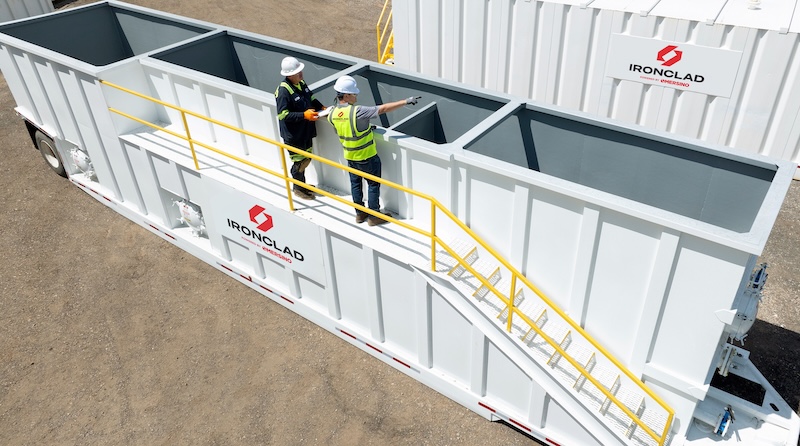
IRONCLAD Powered by Mersino brings 40,000-plus specialty containment assets and 70-plus branches nationwide to exactly this problem. Ironclad owns and manufactures its equipment in-house, runs 24/7 rapid response, and supports every job through its consult, contain, and complete process until the last asset leaves your site. Request a quote or speak with a field expert to build a containment plan before your next project starts.