 Skip to content
5 factors that affect frac tank rental costs
The cost to rent a frac tank is rarely a flat number. The rate you pay depends on how long you need the tank, how much volume it holds, how far it travels to reach your site, and what happens to the fluid once the job ends. Understanding these variables helps operations, procurement, and EHS teams budget accurately and avoid the surprise charges that inflate a project total after the work is done.
A tank that sits on an environmental remediation site for six months carries a very different price than one staged for a two-week turnaround. Emergency response jobs, seasonal weather, and regional demand all push the number in ways that are easy to miss during planning. Operations across oil and gas, chemical manufacturing, and construction all depend on temporary storage, and each application shapes the price differently. IRONCLAD Powered by Mersino gives you a clear, itemized quote at the start of the process, which sets accurate expectations before equipment reaches your site. The five factors below explain what moves frac tank rental pricing and where you have room to control it.
1. Rental duration and term length
Rental duration is the single biggest driver of total cost. Most providers quote a frac tank rental cost per day, but that daily rate usually drops as you commit to a weekly or monthly term. A short emergency response rental can carry a higher effective rate than a planned multi-month project because mobilization, setup, and pickup are spread across fewer billable days.
Duration also interacts with demand. During peak drilling seasons or after a regional weather event, short-term inventory tightens across the rental market, and daily rates climb. Locking in a longer term early protects your budget and guarantees the equipment is reserved when you need it most.
- Daily rates suit short jobs and quick turnarounds, though they carry the highest cost per day.
- Weekly and monthly terms lower the per-day rate and fit remediation, construction, and long-duration storage projects.
- Extending a rental mid-project is common, and confirming rate breaks up front prevents budget overruns later.
- Returning a tank clean and on schedule avoids the extended-rental charges that accrue past the agreed term.
2. Tank size and storage capacity
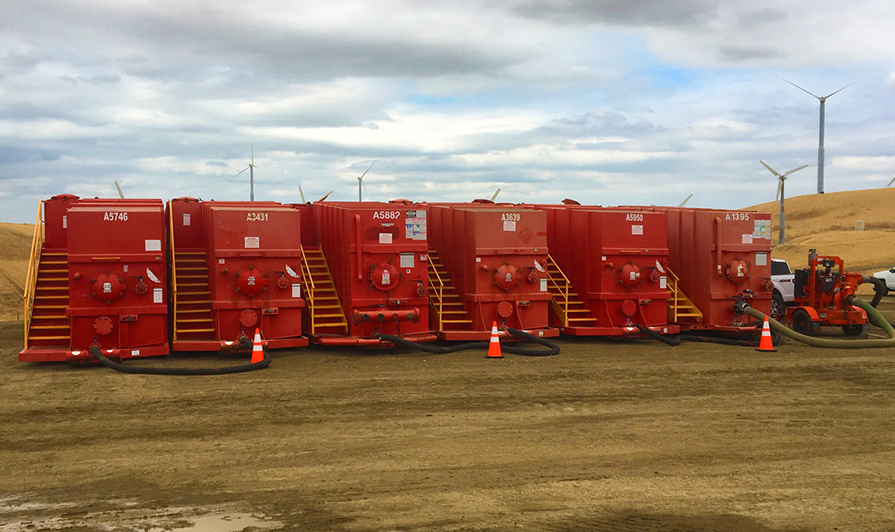
Frac tanks range from mini units to large steel frac tanks that hold 21,000 gallons, or roughly 500 barrels, with larger models available beyond that. Bigger storage capacity raises the rental rate because larger tanks cost more to build, transport, and maintain. Matching tank size to your actual fluid volume keeps you from paying for capacity you will not use, and it prevents the opposite problem of renting too small and scrambling for a second unit mid-job.
Capacity planning should account for peak volume, not average volume. A site handling flowback, drilling fluid, groundwater, or stormwater can see intake spike well above its daily baseline, and undersized temporary storage forces costly rush deliveries at the worst possible moment.
- Mini frac tanks work for tight sites and smaller volumes of water or liquid waste.
- Standard 21,000-gallon tanks handle most water storage, flowback, and fluid management needs.
- Running several tanks in series is often more cost-effective and flexible than oversizing a single unit.
- Building in a modest capacity buffer protects against volume spikes without a second mobilization.
3. Delivery distance and mobilization
Transportation is a real line item, not an afterthought. Mobilization cost covers hauling the tank to your job site and picking it up when the rental ends, and it is usually quoted separately from the rate itself. The farther your site sits from the nearest yard, the higher the transportation costs climb. Sites with limited access, tight staging areas, or special permitting requirements add further to the total.
Provider footprint matters here more than most buyers expect. A company with broad regional inventory can pull equipment from a closer location, which shortens the haul and lowers the delivery charge. Ironclad operates nationwide with branches across the country, which means a crew can reach your job site quickly and keep mobilization costs down.
- Delivery and pickup are usually billed separately from the base rental rate.
- Remote or hard-to-reach sites raise mobilization costs through longer hauls and specialized transport equipment.
- Providers with coast-to-coast inventory shorten haul distances and reduce delivery charges.
- Coordinating delivery windows and site access ahead of time avoids standby fees for waiting trucks.
4. Tank type and special features
Configuration affects price, and not every frac tank is the same. Open-top and closed-top tanks, heated or insulated units, and tanks with internal coatings for corrosive or hazardous fluids all carry different rates. Choosing the right tool for the fluid protects your project, your timeline, and the surrounding environment, and it supports leak detection and spill response that keep the site safe and compliant.
The nature of the fluid usually dictates the specification. Volatile liquids call for vapor control, cold climates call for heat, and aggressive chemicals call for compatible linings. A standard steel tank is the most economical option, but using it for the wrong application creates compliance and safety risks that cost far more than the rate difference ever would.
- Closed-top tanks add vapor control for volatile or regulated liquids.
- Heated and insulated tanks keep fluids workable in cold conditions and cost more than standard units.
- Specialty linings support hazardous waste, salt water, and fuel storage that a standard steel tank cannot handle.
- Roll-off boxes and vacuum boxes fit solids and sludge better than a frac tank, and their pricing follows a different structure.
5. Cleaning, disposal, and add-on services
The base rate rarely covers everything. Tank cleaning, fluid disposal services, and supporting equipment appear as separate charges that shape your final invoice, and they are the costs most often left out of an early estimate. Planning for them at the quoting stage keeps your budget honest and your project closeout smooth.
Cleaning and disposal scale with the material involved. A tank that held potable or non-hazardous water cleans out quickly, while one that held sludge or regulated waste requires more labor, water treatment, and controlled disposal. Ancillary equipment can also turn a bare tank into a complete containment system when the job demands it.
- Cleaning fees apply when a tank holds residue, sludge, or hazardous material at the end of the term.
- Disposal services for wastewater or regulated liquids are priced by volume and material type.
- Add-ons such as pumps, secondary containment berms, and vacuum truck support complete a full fluid management setup.
- Bundling equipment and services with one provider reduces coordination gaps and consolidates billing.
Get an accurate frac tank rental quote
The only way to know your true frac tank rental cost is to match the equipment to the job. IRONCLAD Powered by Mersino maintains one of the largest specialty containment fleets in the country, which means shorter hauls, faster mobilization, and the right tank for your fluid. Ironclad's field experts help you size the tank, plan delivery, and account for cleaning and disposal before the first invoice arrives, and that planning is what keeps a project on budget from start to finish.
Contact Ironclad today for a frac tank rental quote built around your project.