Skip to content
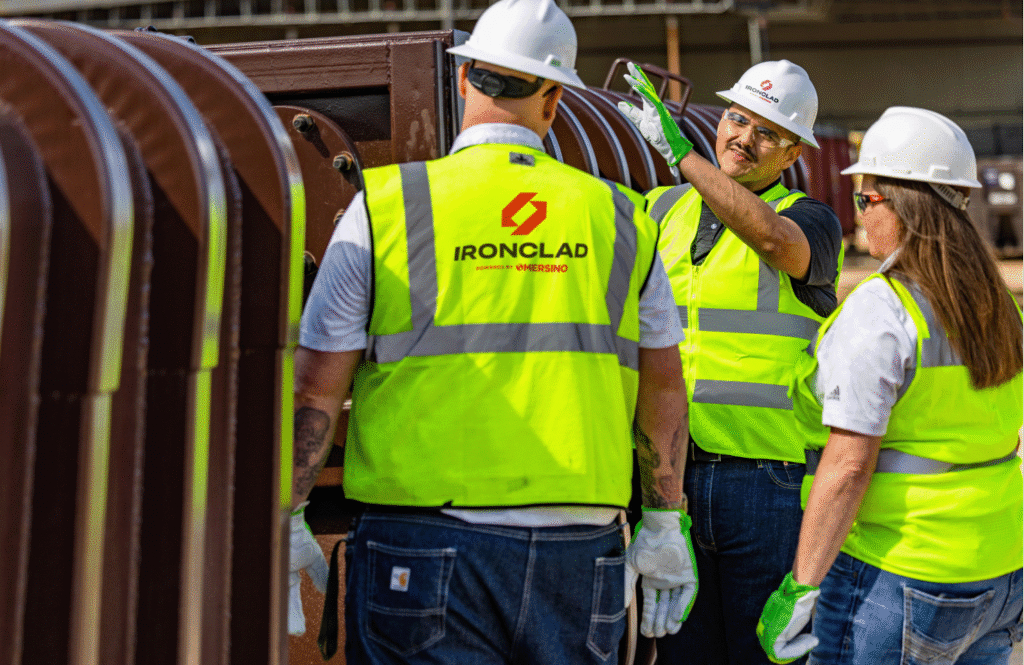
When IRONCLAD Powered by Mersino set out to grow our dewatering work on the West Coast, we brought on Kevin Chambers to build and run projects across the western region. Kevin carries roughly 16 years in dewatering along with a background in hydrology and environmental science. His experience is a useful starting point for explaining what dewatering actually involves and why the right partner matters more than most people expect.
The challenge
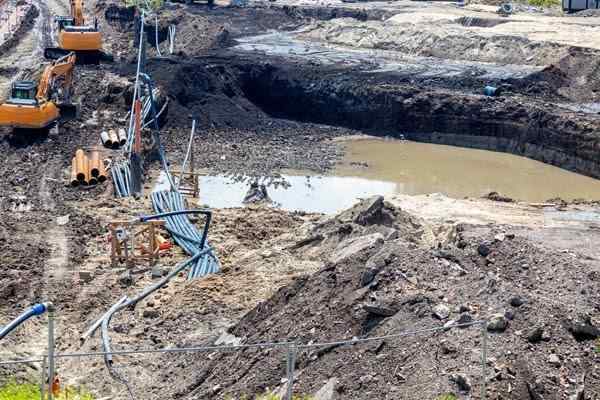
Dewatering can look straightforward from the surface, but the science underneath it is more involved. Water does not move through the ground the same way everywhere. It runs quickly through sand and gravel and slowly through clay. Predicting how much water a site will produce, and how far a well will pull the water table down, takes an understanding of hydraulic conductivity, Darcy’s equation, pump curves, and drawdown. Groundwater also shifts with tidal cycles and atmospheric pressure, so two sites that look alike on the surface can behave very differently.
This is where field experience matters. Years of running rigs and reading subsurface conditions let Ironclad’s crews anticipate how a site will behave, often working through calculations that others rely on software to handle. When the ground changes, they can tell from how the rig responds and adjust the plan accordingly.
What clients value in a dewatering partner
Dewatering is a relationship business as much as a technical one. Construction schedules move. A crew might be booked for four weeks straight, work two, then return three months later to finish. Conditions change mid-project, and an emergency can put a site underwater with no warning. Clients need a partner who can flex with all of that.
Responsiveness is a large part of it. Mersino has a track record of showing up when it counts, including crews mobilizing on Christmas Eve to handle a burst pipe rather than letting a site sit until the next workday.
Underneath everything is knowledge. Many companies say they can dewater, but the results depend on whether their people understand what is happening below the surface.
Kevin Chambers is a regional solutions specialist who runs dewatering projects across Ironclad’s western region. He started as a driller, moved into project management, and built his expertise over years of working directly with the ground, equipment, and groundwater systems. That background lets him read a site as he drills it: “I can tell what’s going on in the ground, what we’re drilling in and how the ground and water is acting by the rotation of the drill head, how the chain just tightened or loosened, the variance in penetration, the smell of the hydraulic oil,” he says.
His background in hydrology connects those real-time observations to how groundwater is moving beneath the site. Combined with project management experience, that means Ironclad can make informed decisions quickly, improve efficiency, and adjust the plan when conditions change.
The response
One risk sits above the rest. Pull water out of the ground too aggressively next to a building, and the ground can settle as the soil compacts. Saturated soil holds water in the spaces between particles, and if you remove that water, the ground above can drop. Do that next to an apartment complex without a plan, and you can damage the structure.
The fix is a recharge well. Ironclad pulls water from the excavation area and puts clean water back into the ground before it reaches the building. That holds the water table steady where it needs to stay while keeping the dig dry.
The equipment on site
Dewatering runs on drilling. Ironclad operates three sonic drill rigs, which use vibration along with rotation to advance into the ground. Sonic drilling is quieter than conventional methods and produces less waste, which matters on tight sites. For larger diameters, the team runs a top-head drive rig capable of a 36-inch bore.
The rest of a setup includes the wells themselves, built from PVC, along with pumps, header pipe, and the wiring that ties the system together. On a job you will also see a forklift, sometimes an excavator, and a skid steer, plus stockpiles of filter pack gravel and bentonite for sealing the wells.
The outcome
The Northwest is slowing while Idaho and Montana boom. Population growth is driving expanded water and sewer lines, deeper below-grade buildings such as parking garages, and underground river crossings that need launch and receiving pits. More of that work sits below the water table, which means more demand for dewatering.
Ironclad is actively meeting contractors, putting in bids, and building the relationships that western projects will grow from. To talk through a dewatering project in the western region, contact Ironclad.