Skip to content
Case studies / Hydrotesting
Multi-segment pipeline hydrotest: staging and reusing water across five remote sites
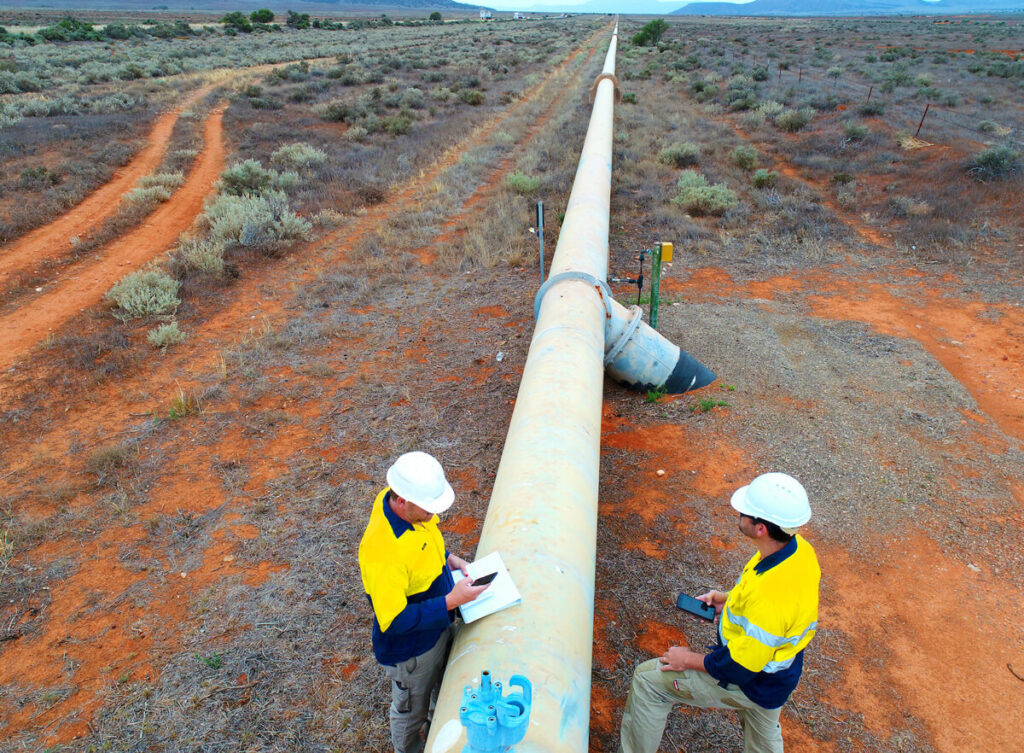
A midstream pipeline operator was completing a new gathering line buildout across a remote stretch of the Permian Basin. The work included five separate hydrotest segments, each requiring a specific staged water volume held under pressure for the standard hold period before the next segment could move forward.
Water access in the region was limited. Approved municipal sources were a long haul away, and ongoing drought conditions had pushed hauled water costs higher across the basin. Treating each segment as a single-use test, sourcing fresh water for each one and discharging it after, was not financially or logistically practical. The operator needed a partner who could plan, stage, and move water at scale across the project footprint.
IRONCLAD Powered by Mersino was brought in to handle the full water logistics scope: sourcing coordination, staging, transfer, filtration, and final disposal.
At a glance
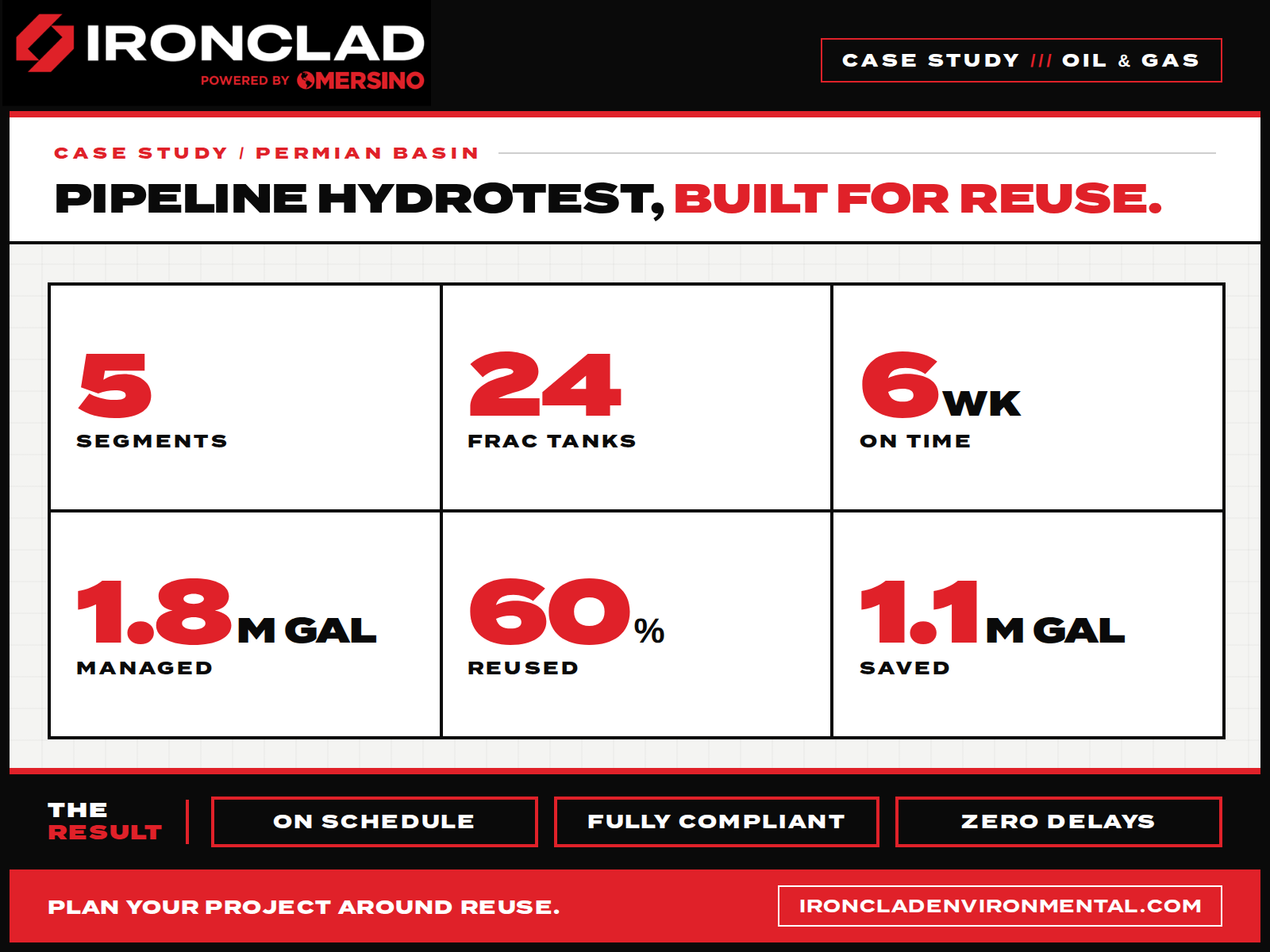
- Industry: Oil & Gas / Midstream Pipeline
- Project type: Multi-segment pipeline hydrotest
- Location: Permian Basin, West Texas
- Project duration: Approximately 6 weeks
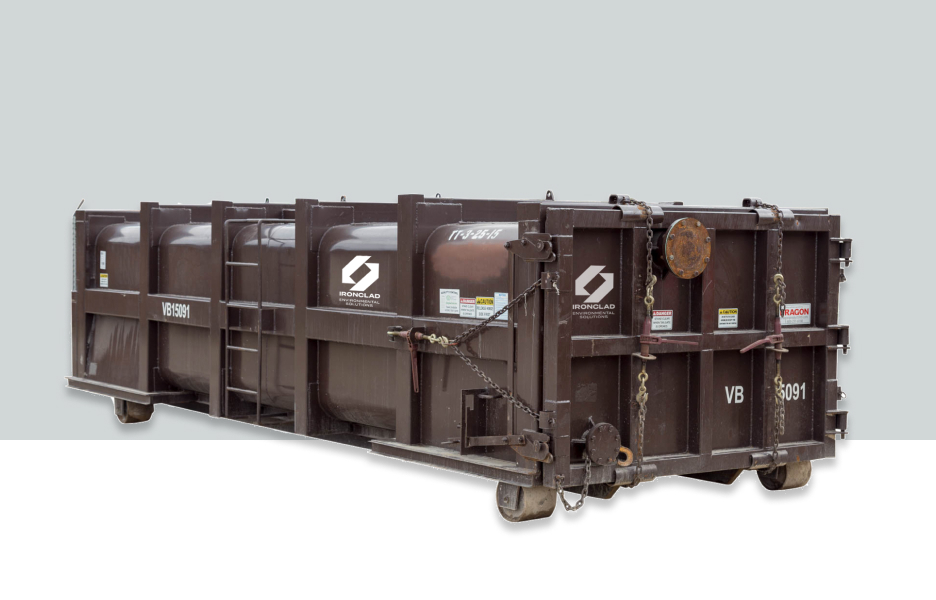
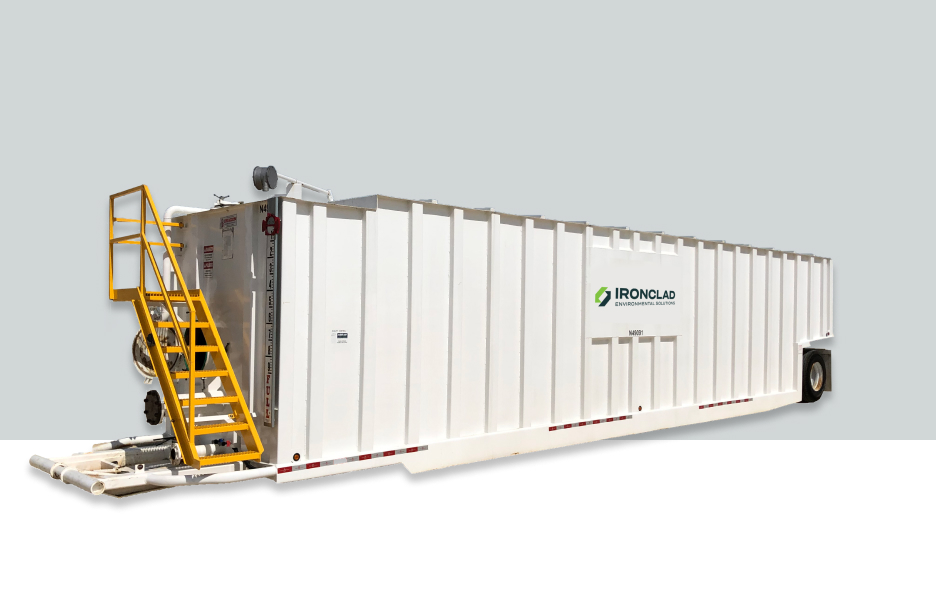
- Equipment deployed: 24 frac tanks, 6 vacuum boxes, transfer pumps, and in-line filtration
- Water managed: Approximately 1.8 million gallons
- Outcome: Completed on schedule, with roughly 60% of test water reused across segments
The challenge
The project carried several operational pressures that had to be addressed before mobilization:
- Constrained water sourcing: Limited municipal access in the immediate area meant long hauls from approved sources. Regional drought had driven hauled water cost and availability in the wrong direction.
- High staged volumes: Each segment required its full test volume on-site before testing could begin. There was no margin for late or partial deliveries.
- Geographic spread: Five test segments were separated by miles of rural road. Moving water efficiently between them required careful sequencing and transfer capacity.
- Schedule dependency: Each segment fed into the next. Any delay in water staging would push the following test window and ripple through the overall construction schedule.
- Disposal exposure: Discharging used hydrotest water at each segment would have added permitting, testing, and hauling cost at every stop, on top of the fresh water already sourced.
A single-use water approach would have multiplied every one of these problems by five.
The response
Ironclad’s field team built the water plan around capture and reuse from the start, rather than treating reuse as a mid-project adjustment.
Pre-project planning
Before any equipment moved, the field team mapped each segment’s volume requirement, test sequence, and site access points. The result was a transfer sequence that aligned with the construction schedule and minimized the number of haul trips needed across the six-week project.
Equipment staged
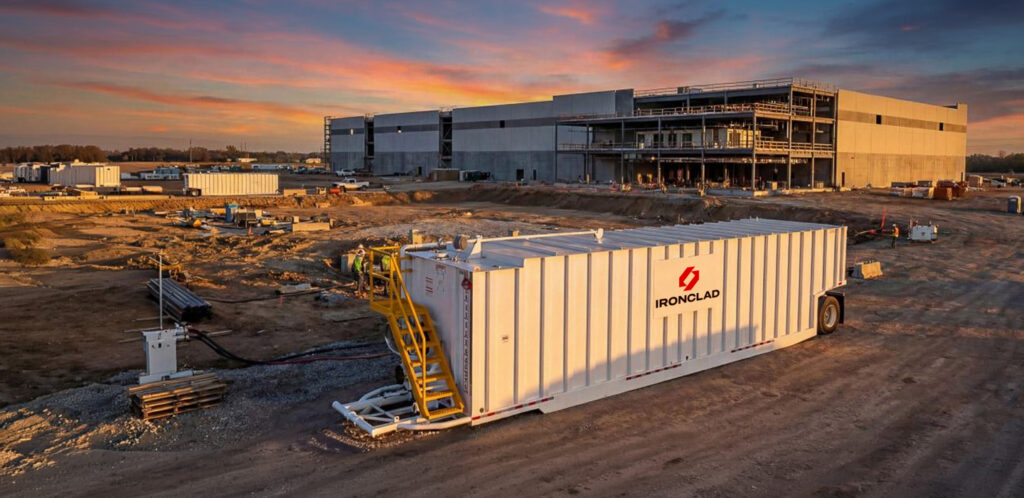
Twenty-four frac tanks were distributed across the five segments based on each segment’s volume requirement. Six vacuum boxes and a set of transfer pumps were positioned to move water between sites as each test completed. In-line filtration units were staged with the transfer equipment to handle sediment pickup between segments.
Sequenced staging and transfer
Water was sourced and staged at segment 1 ahead of the first test. As each test completed, the test water was captured into frac tanks, run through filtration to remove sediment introduced during testing, and transferred to the next segment in sequence. Top-up volumes were sourced as needed to maintain the full test volume at each new segment, but the bulk of the water moved with the project.
Final segment handling
Water from segment 5 was captured, tested, and routed for compliant disposal. Because the reuse strategy had been documented from the start, the final disposal step had clean records to support permit and reporting requirements.
The outcome
The project hit every operational target it was measured against:
- On-schedule completion across all five hydrotest segments
- Approximately 60% of test water reused across segments through capture, filtration, and transfer
- Roughly 1.1 million gallons of fresh water sourcing avoided compared to a single-use approach
- Significant reduction in hauling trips and the associated cost, fuel, and road time
- Compliant final disposal with full documentation for the segment 5 discharge
- Zero schedule delays attributable to water logistics
For a project running in a water-stressed region under tight construction timelines, the reuse approach removed water sourcing from the critical path entirely.
Why the approach worked
The result was driven by three things working together:
- Fleet scale: Pre-staging 24 frac tanks across five remote sites at the same time required the kind of inventory that few providers can mobilize. Ironclad operates one of the largest specialty containment fleets in the country, which made simultaneous staging possible.
- Field expertise: Sequencing the transfers to match the construction schedule, and adjusting on the fly when test windows shifted, required a field team that understood both the equipment and the operational rhythm of a hydrotest program.
- Single-source logistics: Storage, transfer, filtration, and final disposal were handled under one provider. That eliminated the coordination gaps that show up when water sourcing, staging, and disposal are split across multiple vendors.
Reuse was built into the project plan from day one. It was not a workaround applied after the fact.
Application beyond this project
The same approach extends well beyond pipeline hydrotesting. Any water-intensive project with multiple stages or test windows is a strong reuse candidate, including:
- Tank and pressure vessel testing programs with multiple units
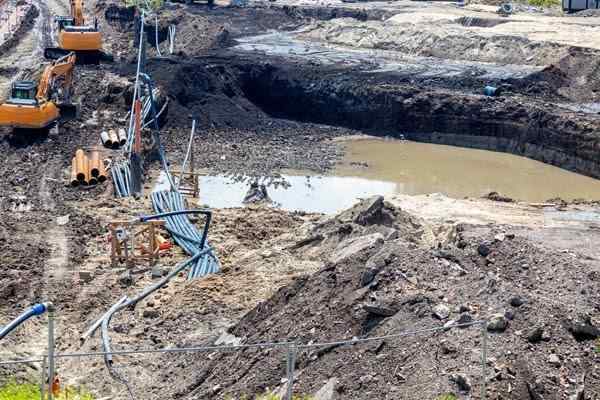
- Multi-phase construction dewatering where captured water can support dust control or compaction
- Industrial cleaning and flushing programs that run across multiple assets
- Any project in a water-stressed region where sourcing cost and availability are operational risks
When capture and transfer are planned alongside the water requirement, reuse stops being a sustainability story and becomes a schedule and budget tool.
Plan your project around reuse, not disposal
Multi-site water projects do not have to mean multi-site water sourcing. With the right planning and the right equipment staged ahead of time, the same volume can do the work of two or three.
Planning a hydrotest or multi-site water project? Ironclad’s field experts can build a staging, transfer, and reuse plan tailored to your site footprint and schedule. Contact Ironclad today to get started.